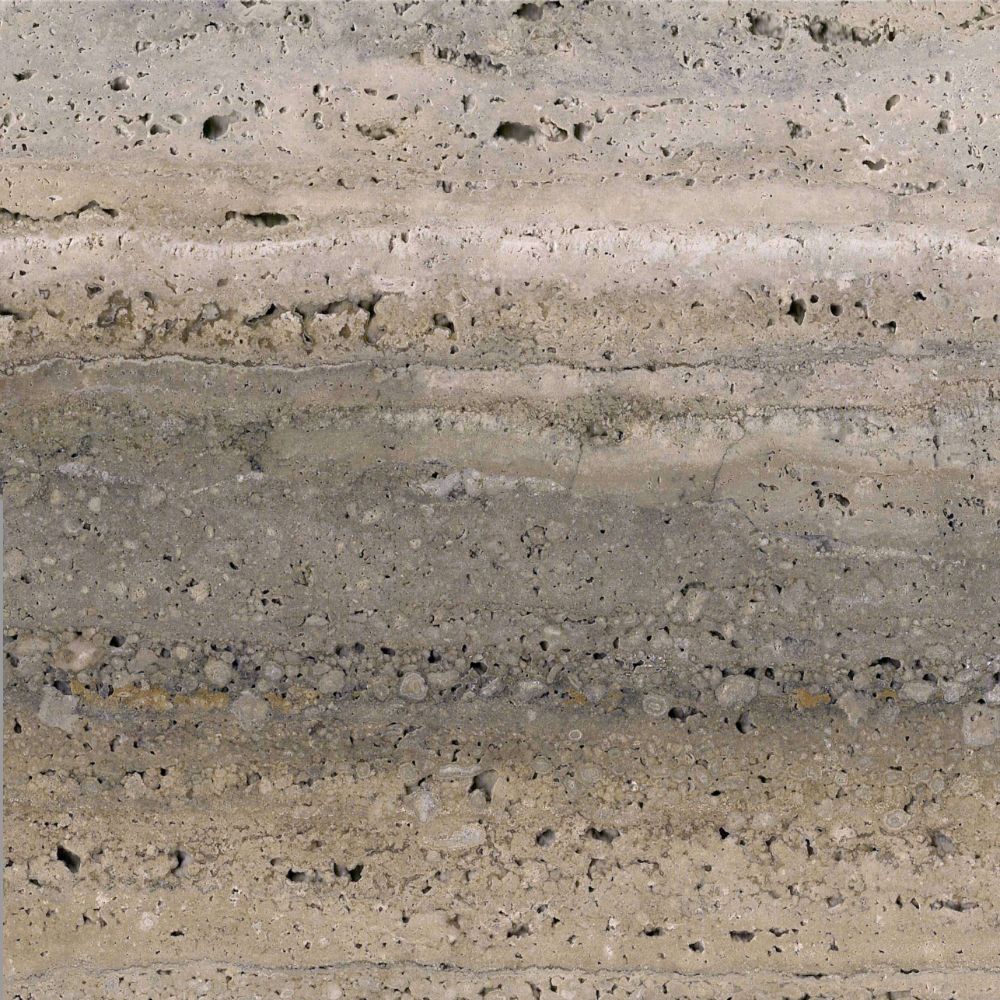
Travertine, while similar to marble in many respects, results from deposition of calcium carbonate from mineral-rich waters over a few hundred thousand years when the waters release carbon dioxide mostly in hot springs but may also occur in rivers, lakes or caves where it forms stalactites and stalagmites. It is quarried in much the same way as marble. Being a kind of limestone, it may, if left alone for a few millennia, become marble itself.
The characteristic pores form when organic material such as leaves or even small animals becomes trapped within the layers as they form.Notable natural travertine terraces are to be seen at Plitvice, Croatia, Pamukkale, Türkiye and Yellowstone, USA with the main commercial sources being in Türkiye, Italy, Mexico, Iran and Peru.