Development
It has been said that, without concrete, there would have been no civilization. Certainly it has been with us in some form or other for the last nine millennia.
Most historians consider that the first concrete was developed by the Nabataean people of Petra who used it for water cisterns and housing, eventually producing a waterproof version using calcium silicate and aluminate in place of the usual hydroxide.
The ancient Egyptians and Greeks employed various forms of mortar in flooring and, most notably, in the construction of the great pyramids.
The Romans used volcanic ash, lime and seawater to make a concrete which is one of the most durable ever. It was used in the Colosseum along with many other famous structures and continues the hardening process in the present day – about 2,000 years later!
This technology was lost upon the fall of the Roman Empire until the Renaissance when it was rediscovered.
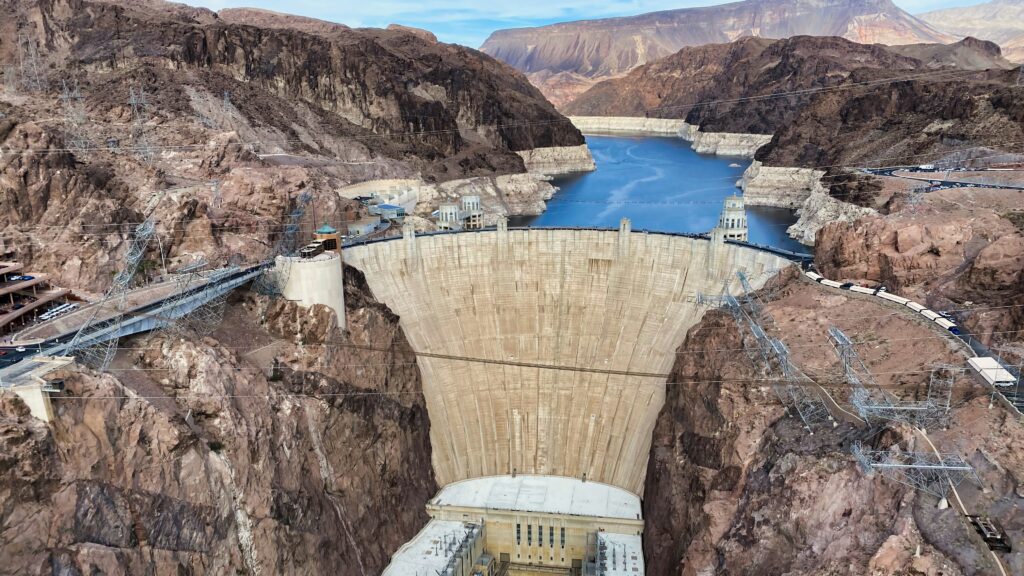
Portland cement, patented by Joseph Aspdin in the early 19th century, became the basis of most of the concrete in use today – often in combination with steel mesh or rebar as reinforced or pre-stressed concrete. The Hoover Dam, like the Colosseum, continues to harden but the process will be completed within a hundred years or so.
Innovative uses
Although primarily used for infrastructure, concrete has found some unusual uses in décor, jewelry and furniture. It has even been used to make musical instruments including harps, guitars and mandolins.
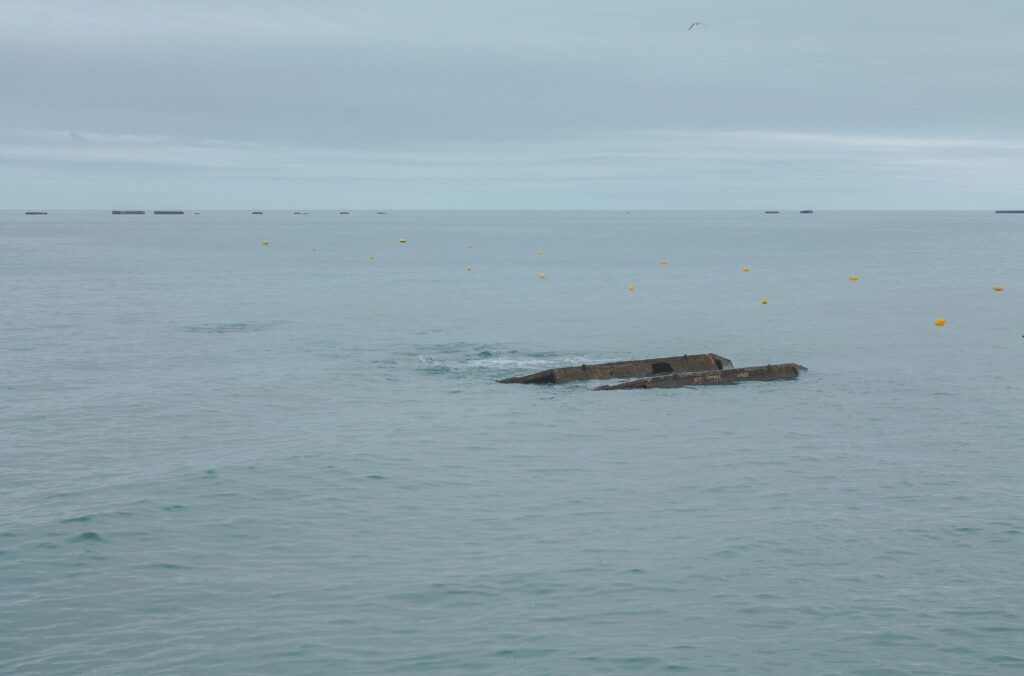
Perhaps the most bizarre use of concrete was its use in shipbuilding. During both world wars ships were built using a concrete-covered frame. Not surprisingly, they were heavy, slow and inefficient. They did, however, overcome the steel shortages and were unaffected by magnetic mines. Post-war they became breakwaters or warehouses with a few remaining afloat even today. The same technology gave us the Mulberry harbours which were assembled from concrete boxes towed across the Channel and sunk. They were crucial to the success of the D-day Normandy landings serving to receive millions of troops, supplies and vehicles as the invasion proceeded. Many of them remain just off the beach at Arromanches, having become a tourist attraction.
Concrete in the future
At present most concrete used in construction is a high-emission, energy-intensive material. The use of concrete is estimated to cause around 8% of CO2 emissions and is mostly associated with cement content.
Ways in which cement use may be reduced include increased use of fillers such as gravel or recycled aggregates and the addition of supplements and binders such as fly ash, fired clay, silica fume or slag. Substitution with natural materials will also be an option in many cases. The strategy adopted will depend on the structural requirements, cost parameters, operational implications and the expected lifespan of the building.
3d printing of buildings is an exciting development and promises to reduce time and costs while improving sustainability by reducing waste and increasing the use of alternative and recycled materials.
Other innovations under development or entering production include self-healing concrete where capsules which fill in cracks as they develop are incorporated, smart concrete with embedded sensors which monitor structural integrity, and even light-emitting concrete which absorbs solar energy and gives off light during the hours of darkness.
So, even after many thousands of years, it appears that concrete has a bright, probably limitless future.