How rhythmic timber lines change the way a room sounds
Susie Chen - Director, akustikplus UK
There is something deeply satisfying about a line. Space A opened this series with stripes in stone, and I have been thinking about lines ever since, because the work I do is, in a way, all about them. The acoustic timber panels I spend my days with are really just rhythmic lines: slim battens of real wood, set at an even cadence across a wall or a ceiling. They read as a design choice, and they are one. But these particular lines are also quietly at work. In the slim gaps between them, sound is being softened, caught and calmed. The pleasure sits on the surface. The function lives in between.
THE LINES THAT TUNE A ROOM
Nowhere is that clearer than in a concert hall. In Andermatt, a Swiss mountain village sitting
above 1,400 metres, Studio Seilern Architects of London created a world-class hall that can seat roughly half the village at once. Beneath a ceiling more than twelve metres high, we produced over 1,000 square metres of custom acoustic panels in European oak, wrapping the walls and ceiling. The lines here are doing the most exacting job of all, shaping the way music actually reaches the ear, and yet the room feels intimate and warm rather than technical. That is the quiet trick of a good acoustic line. The discipline is invisible. The calm is what you notice.
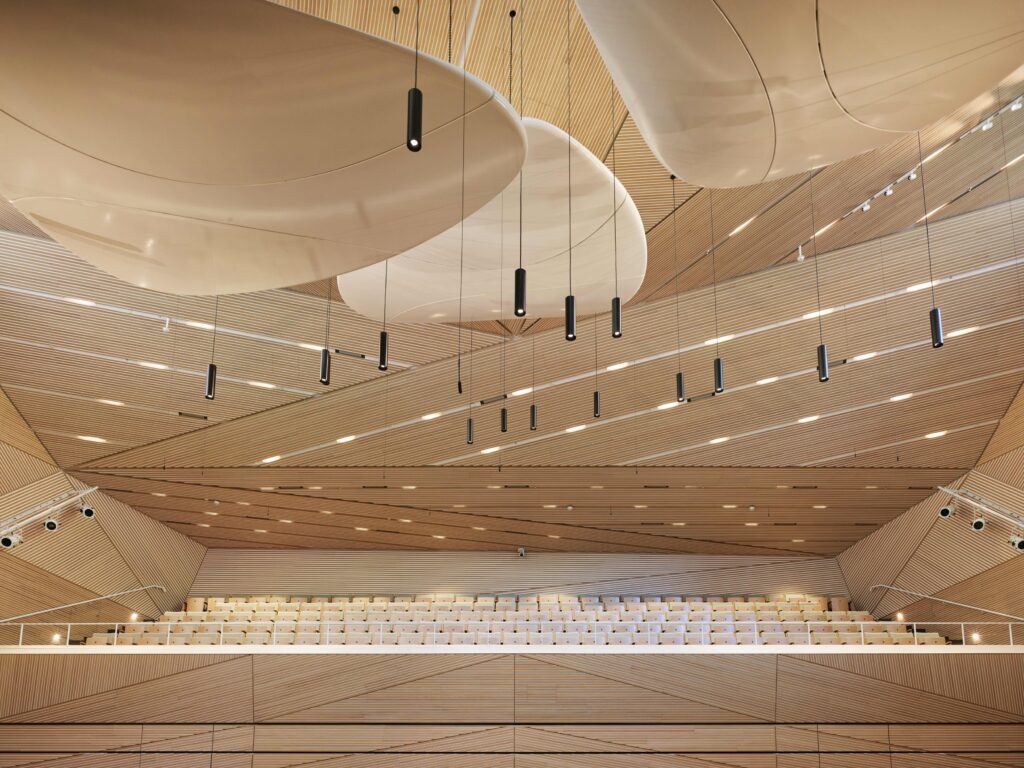
Andermatt Concert Hall, Switzerland. Studio Seilern Architects. Custom acoustic panels in European oak. Photo: Roland Halbe
LINES AT WORK
Lines scale beautifully. At the LVOVO Business Center in Vilnius, acoustic ribs in warm Hamilton oak climb a thirty-metre atrium, mounted alternately upright and across as they rise toward the roof. For all the glass and the height, the space stays acoustically composed, because those rhythmic timber lines are absorbing the noise that hard, open-plan offices usually throw straight back at you. Set against a dark backing, the oak almost glows. It is a neat reminder that the things which make a workplace look considered, and the things which make it quiet enough to think in, can be one and the same gesture rather than two competing ones.

LVOVO Business Center, Vilnius. Cloud Architektai. Acoustic ribs, slimline 32/3 in Hamilton oak. Photo: Leonas Garbačauskas
LINES THAT HELP US THINK
The stakes are highest where people are learning. Poor acoustics in schools are a real and well-documented problem: noise and reverberation make it harder for children to concentrate, and can leave them stressed and headachey by the end of the day. At the Emanuel School in Cologne, around 800 square metres of slimline panels in silver fir line the assembly hall, canteen and stairwells, lending warmth to bright, hard-surfaced rooms and taking the edge off the din. Calmer acoustics help everyone, and they help most of all the many people who feel sound keenly. Some estimates suggest as many as one in five of us is neurodivergent, and for them a quieter room is rarely a luxury. It is the thing that makes the day workable.
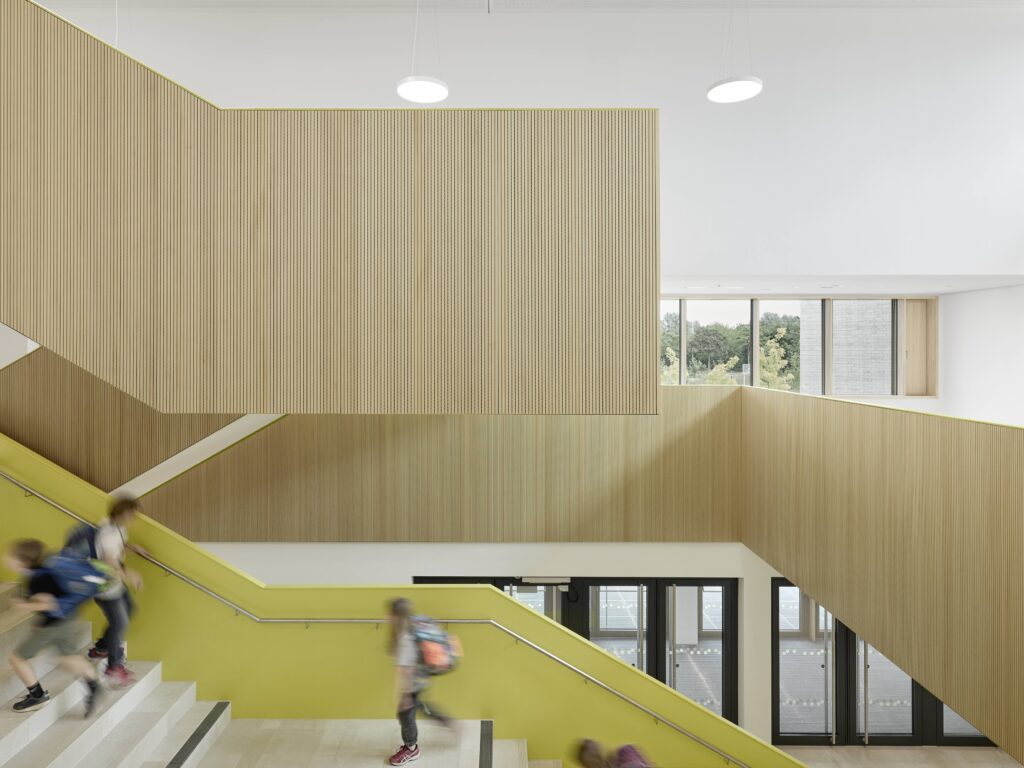
Emanuel School, Cologne. Drei Architekten. slimline 16/3 in silver fir veneer. Photo: Zooey Braun
THE QUIET LINE AT HOME
You do not need a concert hall to feel the difference. In a Victorian townhouse in South West London, we lined one wall of an open-plan living and dining room with smartline panels in oak. The fine vertical rhythm brings a sense of calm and architectural clarity, and at the same time it draws the reverberation out of a space where cooking, talking, homework and family life all happen at once. Improving the way a home sounds is not an indulgence. For anyone who spends real hours in a room, it is part of what lets you finally switch off and feel properly at ease there.
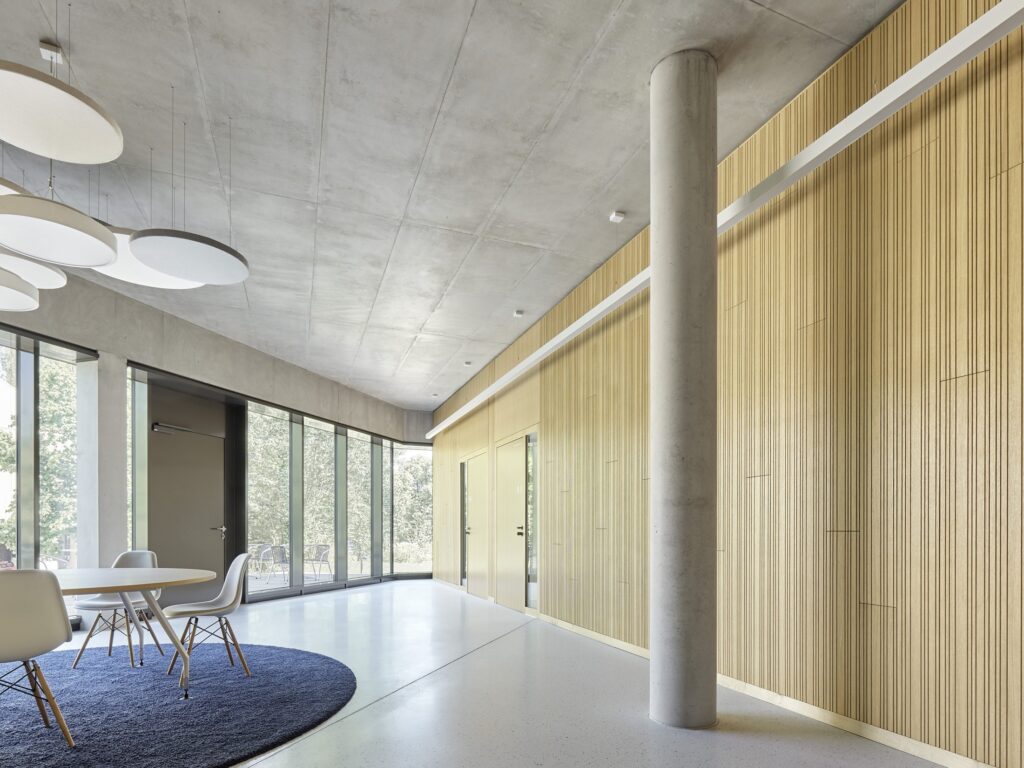
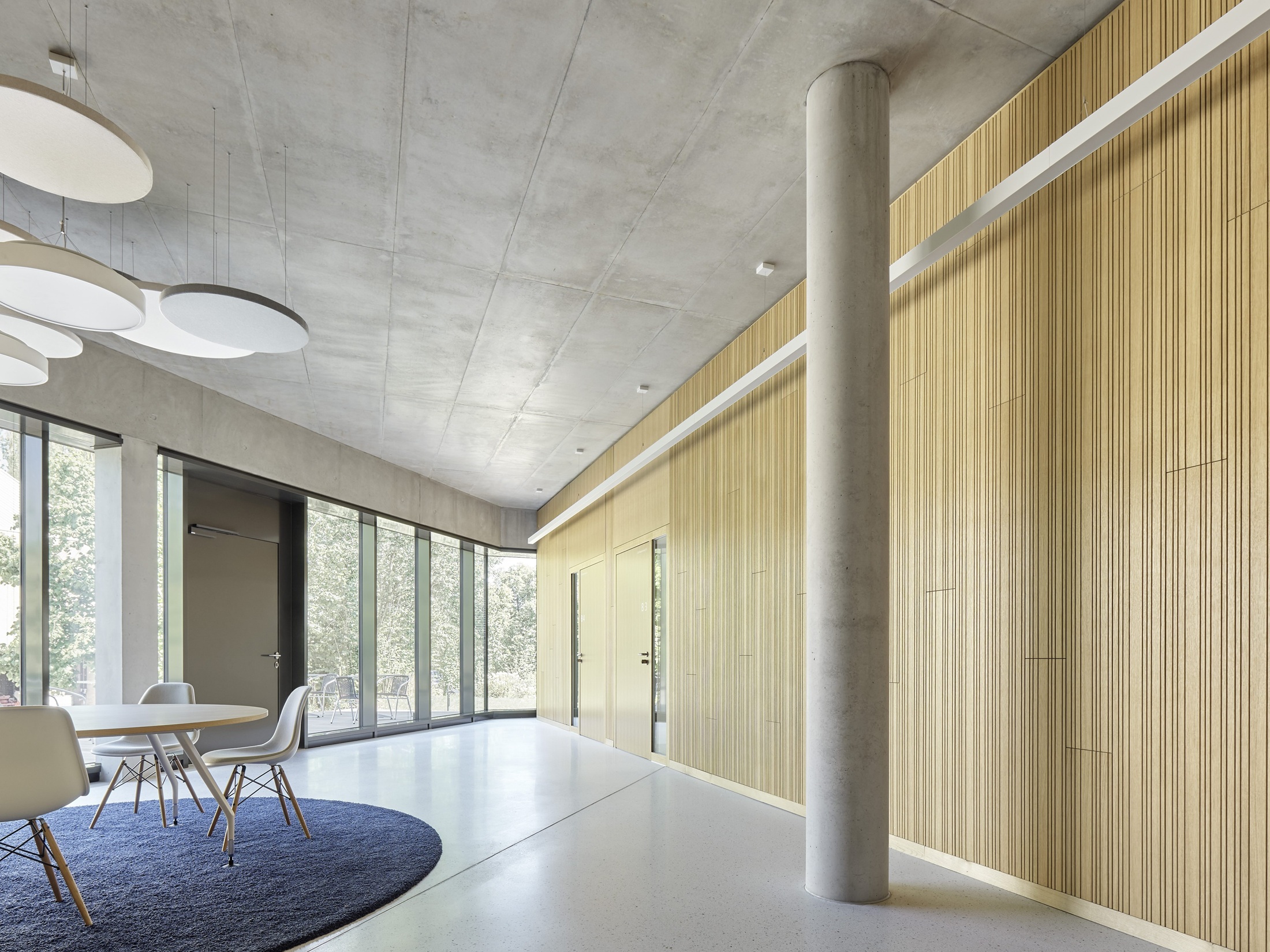
Steinbeis-Haus, Stuttgart. Drei Architekten. slimline stripes [3] in European oak. Photo: Zooey Braun
This is what I mean when I say design goes beyond how a thing looks. A timber line can be the most natural ornament in a room and, in the very same move, the quiet reason that room feels good to be in. If a space you are working on does not yet sound the way it looks, I would love to help you find the line. Come and say hello on LinkedIn or Instagram or at [email protected], or have a look at what we do at akustikplus.