Since the 14th century, Portland stone has helped shape London’s architectural identity and it appears on many of the capital’s most celebrated buildings. It remains widely specified by surveyors, architects and conservation professionals today.
Where does Portland Stone come from and why is it used?
Hewn from quarries on the Isle of Portland, a tied island connected to Dorset by Chesil Beach, this sedimentary limestone formed approximately 145 million years ago in warm, shallow seas. Portland is part of the Dorset and East Devon Coast, commonly known as the Jurassic Coast, a UNESCO World Heritage Site. The combination of high-quality, relative consistency and proximity to the sea made Portland stone well-suited to transport by ship to London and beyond.
Portland stone is commonly quarried from three principal beds or layers:
Basebed is the oldest, finest and most uniform with relatively little shell content, making it especially valued for fine carving and crisp architectural detail.
Whitbed is a good all-round building stone, slightly more textured and shelly than Basebed, durable, workable and widely used for external cladding and conservation work.
Roach is the boldest and most fossil-rich with obvious shell fragments and voids. It is harder-wearing and highly characterful, but less refined where a smooth, finely carved finish is required.
The Breton Cube from Solid Nature
What makes Portland Stone so attractive to Architects to this day?
One of the most fascinating aspects of Portland stone is that its ancient origins often remain visible. Many blocks contain fossilised shells and marine fragments, providing a direct connection to the prehistoric seas in which the stone formed. Opinions differ on their desirability. Some Architects and clients favour the most uniform stone available, seeking a clean and consistent appearance across an elevation. Others actively celebrate these fossil inclusions, viewing them as part of the stone’s natural character and as a quality that distinguishes it from manufactured alternatives. A good contemporary example is the south pavilion at Green Park Station on Piccadilly, where the material’s texture and geological character are allowed to form part of the architectural expression.
A natural stone used in the construction of some of London’s landmark buildings
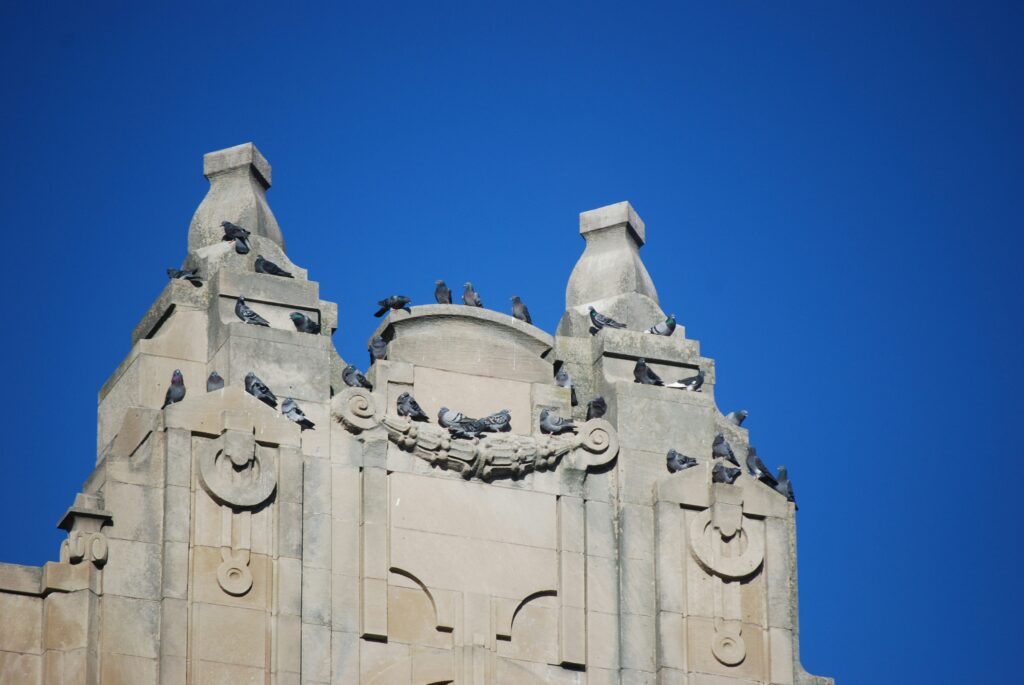
Portland stone’s combination of strength, durability, workability and understated elegance has made it one of Britain’s most important natural building materials. Following the Great Fire of London in 1666, Sir Christopher Wren selected Portland stone extensively for the rebuilding of the city, most notably at St Paul’s Cathedral, helping to cement its reputation as the stone of choice for major civic and architectural works.
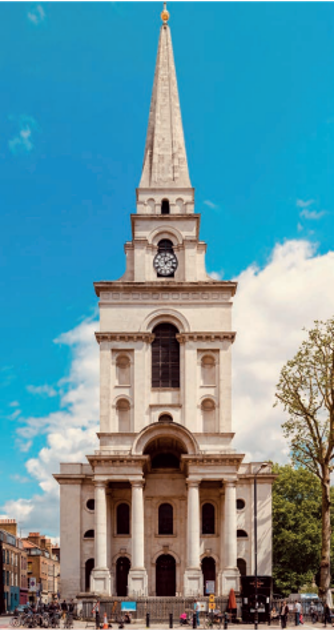
Christ Church Spitalfields is widely regarded as one of London’s greatest brooding Baroque churches. Nicholas Hawksmoor, Wren’s apprentice, was let loose on 6 of London’s 50 new churches that followed on from the completion of St Paul’s. Hawksmoor took what he had learnt from Wren and added some. The result was a striking combination of restraint, monumentality and sculptural confidence.
Portland itself remains closely tied to the material: through quarrying, masonry, tourism, climbing, sailing and the continuing craft of working the stone. Local tradition also holds that some stones marked for Wren’s works at St Paul’s never left Portland, although this is perhaps best treated as part of the island’s architectural folklore rather than established fact.
How has it endured over the centuries?
Water defects
From a building surveyor’s perspective, Portland stone is a robust and durable material. However, like any natural stone, its long-term performance depends heavily on good design, detailing and maintenance. The most common defects encountered are often associated with water rather than the stone itself. Defective copings, blocked drainage routes, failed sealants, inadequate movement joints and poorly detailed interfaces can all result in moisture penetration and localised deterioration
Atmospheric soiling and abrasive cleaning
Atmospheric soiling is another common issue, particularly in urban environments. Historic pollution produced the darkened façades associated with many older London buildings, while modern pollutants, biological growth and general weathering continue to affect exposed surfaces. Care is needed when considering cleaning works. Aggressive abrasive techniques can permanently damage the stone surface and increase future weathering. Any cleaning regime should be carefully assessed, tested and, where appropriate, undertaken with specialist conservation advice.
Natural building material
A largely forgotten detail is that St Paul’s Cathedral was not always the uniformly pale Portland-stone landmark familiar today. Wren’s building also incorporated darker Burford stone from the Cotswolds, giving parts of the cathedral a more varied, two-toned appearance. As this stone weathered and decayed, later repair campaigns progressively replaced it, leaving the more consistent Portland-stone appearance now associated with the building.
Corrosion of fixings
Another important consideration is the condition of metal framing, cramps and fixings behind stone façades. Few defects send a greater shiver down a surveyor’s spine than Regent Street Disease: the corrosion of concealed steelwork behind masonry façades. As embedded steel corrodes, it expands, forcing stonework apart and causing cracking and displacement. The term derives from the concentration of early steel-framed, stone-clad buildings on Regent Street. Its commercial significance was underlined in 2008,when one of Lord Alan Sugar’s property companies reportedly pursued surveyors after acquiring a building affected by the defect. The lesson remains clear: the condition of hidden frames, fixings and support systems should form an important part of any façade inspection and maintenance strategy.
Using Portland Stone in today’s architecture
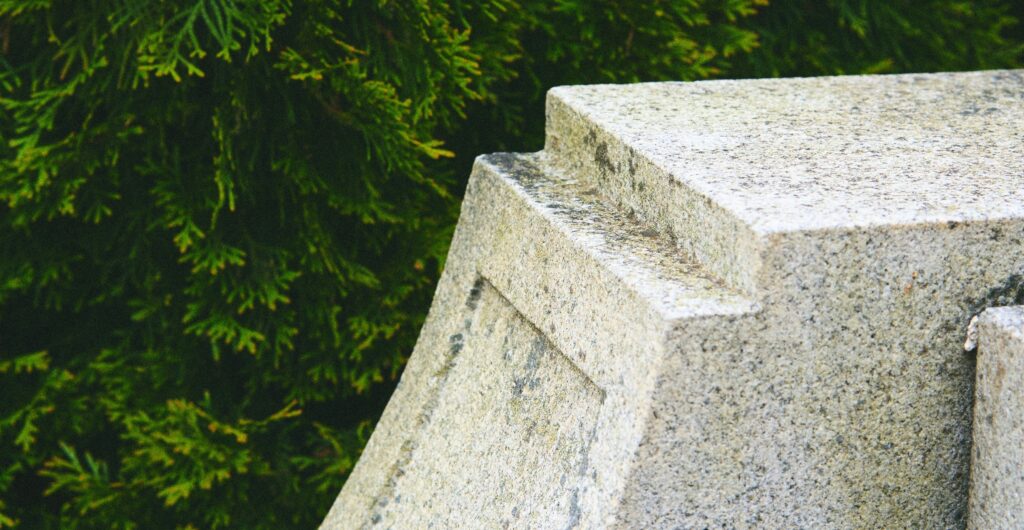
For surveyors, Architects and contractors considering specifying Portland stone, perhaps the most important principle is to respect it as a natural material. Variations in colour, texture and fossil content are not necessarily defects but often intrinsic characteristics of the stone itself. Successful specification can embrace these qualities while ensuring the material is properly detailed to manage water, accommodate movement and facilitate long-term maintenance.
More than three centuries after Wren and Hawksmoor helped establish its architectural reputation, Portland stone continues to show why it remains one of Britain’s most respected building materials. With its geological history, architectural pedigree and proven durability, it is capable of service lives measured not merely in decades, but in centuries – provided it is properly selected, detailed and maintained.